.svg)
.svg)
.svg)
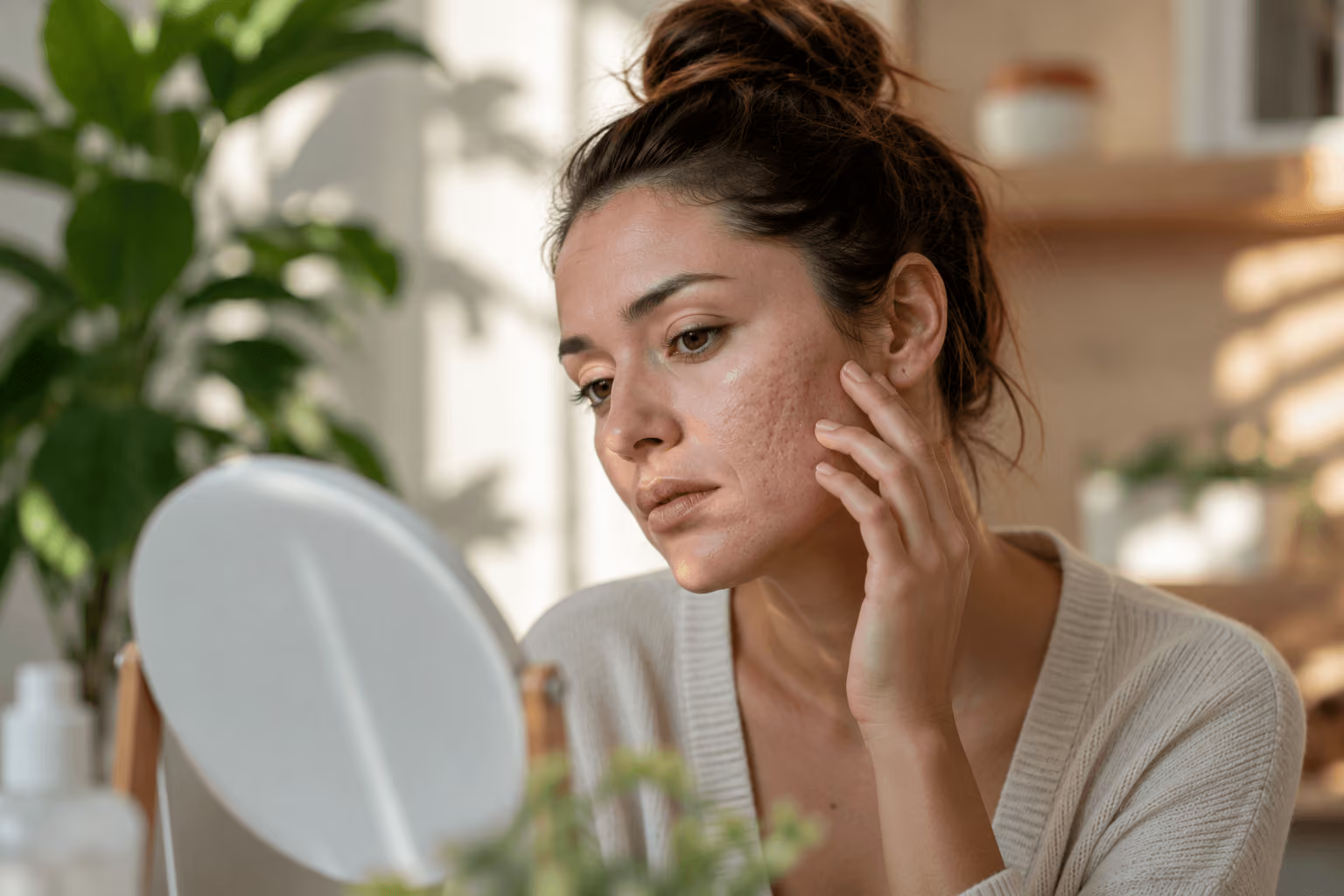
You finally got your acne under control, and then the scars stuck around like an unwanted souvenir. If you have spent months hoping those pitted marks and rough patches would smooth out on their own, you are not alone. Acne scarring is one of the most common skin concerns people bring up at consultations, and it is also one of the most misunderstood. The good news is that scarred skin is not permanent skin. With the right approach, texture can improve significantly, and for a lot of people in Fort Worth, that approach starts with microneedling.
This guide breaks down why acne scars form, why they are so stubborn, and what actually helps, including where microneedling fits into the picture.
Why Do Acne Scars Stick Around Longer Than the Breakouts That Caused Them?
Acne scars form when inflammation damages the deeper layers of skin during a breakout. Your body tries to repair that damage with collagen, but it does not always rebuild evenly. Sometimes it produces too little collagen, leaving behind an indentation. Other times it overcompensates, creating a raised or thickened mark. Either way, the scar tissue that forms is structurally different from the smooth skin around it, which is why it does not just fade the way a temporary red mark might.
Is There a Difference Between Acne Scars and Post-Acne Marks?
Yes, and this distinction trips a lot of people up. A post-inflammatory mark, the pink, red, or brown discoloration left behind after a pimple heals, is not technically a scar. It sits in the top layer of skin and typically fades on its own within a few months, especially with consistent sun protection. A true acne scar involves a change in the skin's texture, whether that is a shallow depression, a deep pit, or a rolling unevenness you can feel with your fingertips. Marks fade with time. Textural scars generally need a treatment that encourages the skin to rebuild itself.
What Are the Different Types of Acne Scars?
Dermatology classifies textural acne scarring into a few main categories. Ice pick scars are narrow and deep, like a small puncture. Boxcar scars have defined edges and a flatter base, often making cheeks look uneven. Rolling scars create a wavy texture because of bands of tissue pulling on the skin from below. Most people have a combination of these, which is part of why a single quick fix rarely solves the whole problem.
What Actually Causes Acne Scarring in the First Place?
Not every breakout leaves a scar, so what makes some skin more prone to it than others?
Does Picking or Popping Pimples Make Scarring Worse?
It absolutely can. Picking disrupts the healing process and pushes bacteria and inflammation deeper into the skin, which increases the odds of textural damage. It is one of the most preventable contributors to long-term scarring, even though it is also one of the hardest habits to break in the moment.
Are Some People More Prone to Acne Scars Than Others?
Genetics play a real role here. Some people produce more collagen during healing, which can lead to raised scars, while others produce less, leading to pitted ones. Skin tone also affects healing response, and deeper skin tones are more prone to lingering discoloration alongside textural changes. The severity and duration of the acne itself matters too. Cystic acne that sits deep in the skin for weeks is far more likely to leave lasting texture than a surface-level breakout that clears in a few days.
Can Untreated Acne Lead to More Scarring Over Time?
Generally, yes. The longer active inflammation lingers, the more opportunity there is for collagen damage. This is one of the main reasons dermatology providers encourage getting persistent or cystic acne evaluated early rather than waiting it out.
When Should You Consider a Professional Treatment for Acne Scars?
Over-the-counter retinoids and vitamin C serums can support skin texture over time, but they typically cannot reach the deeper layers where true scarring lives. If you have tried a consistent skincare routine for several months without a noticeable change in texture, that is usually a sign it is time to talk to a professional about in-office options.
How Does Microneedling Help Improve Acne Scars?
Microneedling uses a device with fine, sterile needles to create controlled micro-channels in the skin. Those tiny injuries trigger your body's natural wound-healing response, which includes new collagen and elastin production. Over a series of sessions, that fresh collagen helps fill in shallow to moderate scarring and smooths the skin's overall texture. Because the treatment relies on your own healing process rather than removing layers of skin, it tends to have a gentler recovery profile than more aggressive resurfacing options.
At Snug Aesthetics, microneedling is performed with SkinPen, and treatments are paired with customizable serums, called glides, chosen based on your specific skin concerns. This allows the treatment to be tailored rather than one-size-fits-all, which matters when acne scarring often overlaps with other concerns like enlarged pores or uneven tone.
What Can Be Added to Enhance Microneedling Results?
For patients looking for more targeted regenerative support, add-ons like PRP, which uses growth factors from your own blood, or PDGF microneedling, which uses purified signaling molecules, can be layered into treatment. These enhancements are designed to support the skin's healing response even further, which can be especially helpful for deeper or more established scarring.
What Should You Expect During Recovery?
Most people experience redness similar to a mild sunburn for a day or two after microneedling, along with some light sensitivity. There is no significant downtime for most patients, though your provider will walk you through personalized aftercare, including sun protection, since freshly treated skin is more vulnerable to UV exposure while it heals.
How Many Sessions Does It Usually Take to See a Difference in Acne Scars?
Because microneedling works by stimulating a gradual collagen response, results build over a series of treatments rather than appearing after one visit. Most treatment plans involve multiple sessions spaced a few weeks apart, and your provider can map out a timeline based on the depth and type of scarring you are dealing with.
Who Is a Good Candidate for Microneedling?
Microneedling tends to work well for people with mild to moderate acne scarring, enlarged pores, uneven texture, and early fine lines. It is also commonly used for skin tone concerns and even stretch marks. Because it is customizable, a consultation is the best way to determine whether microneedling alone will address your scarring or whether a combination approach makes more sense.
Where Can You Get Microneedling in Fort Worth?
If you are searching for a provider who takes a thoughtful, personalized approach rather than a rushed one, Snug Aesthetics is located inside the historic Vinnedge Building in the Fort Worth Stockyards. The practice is family-owned and focuses on natural, unhurried results rather than over-treating. You can learn more about the full range of skincare services offered, or explore how RF microneedling compares if skin laxity is part of your concern as well. Fort Worth residents dealing with acne scars can reach out through the Snug Aesthetics site to schedule a consultation and talk through which approach fits their skin best, or check the FAQ page for answers to common pre-treatment questions.
Frequently Asked Questions
Does microneedling hurt? Most people feel mild pressure or a light vibrating sensation rather than sharp pain, especially since a topical numbing agent is typically applied beforehand.
How long do acne scars take to fade with microneedling? Because the treatment works with your body's own collagen production, visible improvement usually develops gradually over a series of sessions rather than immediately.
Is microneedling safe for all skin tones? Yes, microneedling is generally considered safe across skin tones since it does not rely on heat or light-based technology the way some laser treatments do.
Can microneedling help with more than acne scars? Yes, it is also used for fine lines, texture, enlarged pores, and stretch marks, which is why many patients combine it with a broader skincare plan.
The Scar Story Doesn't Have to Have the Last Word
Acne scars can feel like a permanent reminder of a breakout you would rather forget, but skin has more capacity to remodel itself than most people realize. With a personalized microneedling plan, patience, and the right provider, smoother, more even texture is a realistic goal, not just a hopeful one. This guide was updated this August 2026 to reflect current best practices for acne scar treatment in Fort Worth.